Die Fläche lesenReading the floor#
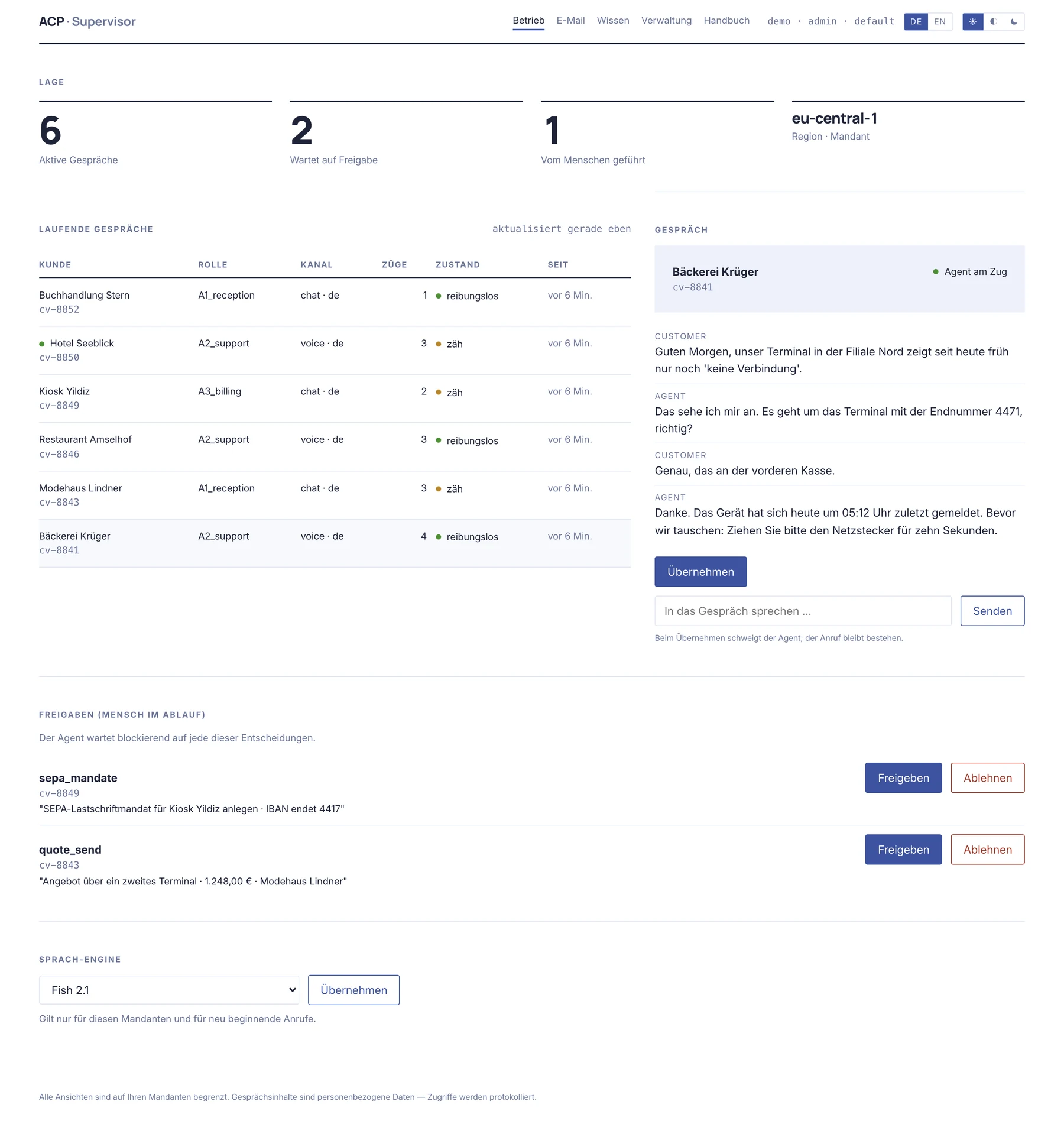
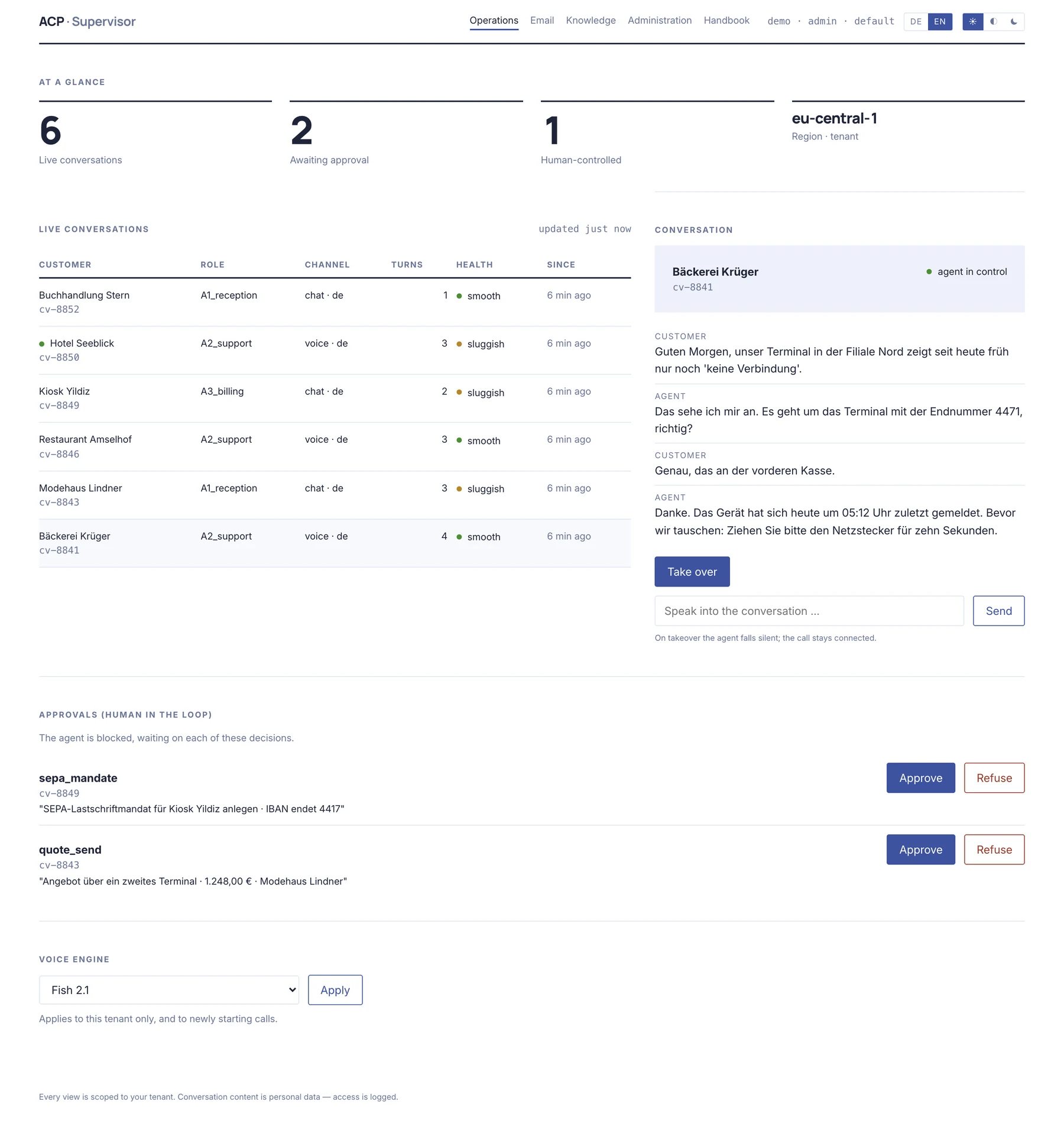
Die Betriebsansicht zeigt jedes laufende Gespräch mit den letzten Beiträgen. Eine Zeile sagt, dass es existiert; der Verlauf daneben sagt, worum es geht.The operations board shows every live conversation with its recent turns. A row tells you it exists; the transcript beside it tells you what it is about.
| SpalteColumn | Was sie beantwortetWhat it answers |
|---|---|
| KundeCustomer | Wer spricht — aus dem ERP, wenn erkannt.Who is speaking — from the ERP when recognised. |
| RolleRole | Welche Aufgabe der Agent gerade hat (A2_support …).What job the agent is doing (A2_support …). |
| KanalChannel | Telefon oder Chat, und die Sprache.Phone or chat, and the language. |
| ZügeTurns | Wie lang das Gespräch schon ist. Viele Züge ohne Fortschritt sind ein Warnzeichen.How long it has been going. Many turns without progress is a warning sign. |
| ZustandHealth | Braucht dieses Gespräch mich? Antwortzeiten, Mühe, blockierte Freigaben.Does this conversation need me? Latency, effort, blocked approvals. |
Zustand ist nicht Stimmung. Wer ruhig auf eine Freigabe wartet, sieht gelb aus und ist trotzdem entspannt — und wer höflich formuliert, während er kündigen will, sieht grün aus. Lesen Sie im Zweifel den Verlauf, nicht die Farbe.
Health is not mood. Someone waiting calmly on an approval looks amber and is perfectly relaxed — and someone phrasing things politely while intending to cancel looks green. When in doubt read the transcript, not the colour.
Beobachten ist nicht ÜbernehmenWatching is not taking over#
- BeobachtenWatching
- Sie sind verantwortlich dafür, es zu bemerken. Der Agent spricht weiter.You are responsible for noticing. The agent keeps speaking.
- ÜbernehmenTaking over
- Sie sprechen jetzt mit der Kundin. Der Agent verstummt.You are now talking to the customer. The agent goes silent.
Etwa fünf gleichzeitige Gespräche pro Person sind die Spannweite, mit der der Dienstplan rechnet. Er zählt mit, wer wie viele beobachtet, markiert Überlast und schlägt vor, wer übernehmen könnte.About five conversations at once is the span of control the roster assumes. It counts who is watching how many, flags overload, and suggests who could take some.
Gespräche, die niemand beobachtet, werden gesondert ausgewiesen. Das ist die gefährlichste Sorte Arbeit: nicht die, die schiefgeht, sondern die, die schiefgeht, ohne dass es jemandem auffällt.
Conversations nobody is watching are called out separately. That is the most dangerous kind of work: not the kind that goes wrong, but the kind that goes wrong with nobody noticing.
Übernehmen — und wieder zurückgebenTaking over — and handing back#
- 1
Zuerst lesenRead first
Die letzten Beiträge sagen fast immer, ob es ein Wissensproblem ist (der Agent findet nichts) oder ein Beziehungsproblem (die Kundin ist verärgert). Nur das zweite braucht einen Menschen sofort.The recent turns almost always tell you whether this is a knowledge problem (the agent finds nothing) or a relationship problem (the customer is upset). Only the second needs a human immediately.
- 2
ÜbernehmenTake over
Ein Klick. Der Agent verstummt, die Leitung bleibt bestehen — die Kundin merkt keinen Abbruch, kein erneutes Wählen, keine Warteschleife.One click. The agent goes silent and the line stays up — the customer experiences no drop, no redial, no hold queue.
- 3
Sich vorstellenIntroduce yourself
Sagen Sie Ihren Namen. Die Kundin hat gerade gewechselt, ohne es zu beantragen; das ohne Erklärung zu tun, ist der unangenehmste Moment im ganzen Ablauf.Say your name. The customer has just been handed over without asking; doing that without a word is the most jarring moment in the whole flow.
- 4
ZurückgebenHand back
Genauso ein Klick. Sinnvoll, wenn der Rest Routine ist — und die Übergabe erzeugt in der Regel gleich das Material, aus dem ein Wissenseintrag wird.One click again. Worth doing when the remainder is routine — and the handover usually produces exactly the material a knowledge record should be made from.
Freigaben entscheidenDeciding approvals#
Unter der Fläche steht die Freigabeliste. Jeder Eintrag nennt das Gespräch, die Aktion und die Einzelheit — Betrag, Konto, Kundin. Der Agent wartet blockierend auf jede dieser Entscheidungen.Below the floor sits the approvals queue. Each entry names the conversation, the action and the specifics — amount, account, customer. The agent blocks on every one of these.


- Lesen Sie die Einzelheit, nicht den Aktionsnamen.
quote_sendsagt nichts; „1.248,00 € an Modehaus Lindner" schon.Read the detail, not the action name.quote_sendtells you nothing; "€1,248.00 to Modehaus Lindner" does. - Ablehnen ist kein Scheitern. Eine Ablehnung ist die billigste Korrektur im System — sie kostet einen Satz im Gespräch statt einer Rückabwicklung.Rejecting is not a failure. A rejection is the cheapest correction available — it costs one sentence in the conversation instead of a reversal.
- Im Zweifel öffnen Sie das Gespräch. Die Freigabe ohne ihren Kontext zu entscheiden, ist die häufigste Ursache für eine falsche Zusage.When unsure, open the conversation. Deciding an approval without its context is the most common cause of a wrong commitment.
Eine Ausnahme entscheiden Sie nie: Ein Widerspruch der Kundin wird sofort und ungeprüft ausgeführt und landet auf der Sperrliste. Er taucht hier gar nicht erst auf.
One thing you never decide: a customer opt-out commits instantly and ungated, and lands on the suppression list. It never appears in this queue at all.
Ausgehende E-Mail freigebenReleasing outbound email#
E-Mail-Entwürfe stehen in einer eigenen Liste. Jeder Entwurf nennt einen Grund, warum er zur Freigabe steht — meist eine Zusage aus einem Gespräch, ein Preis oder eine Frist mit rechtlicher Folge.Email drafts sit in their own list. Every draft states a reason for needing review — usually a commitment made in a conversation, a price, or a deadline with legal effect.
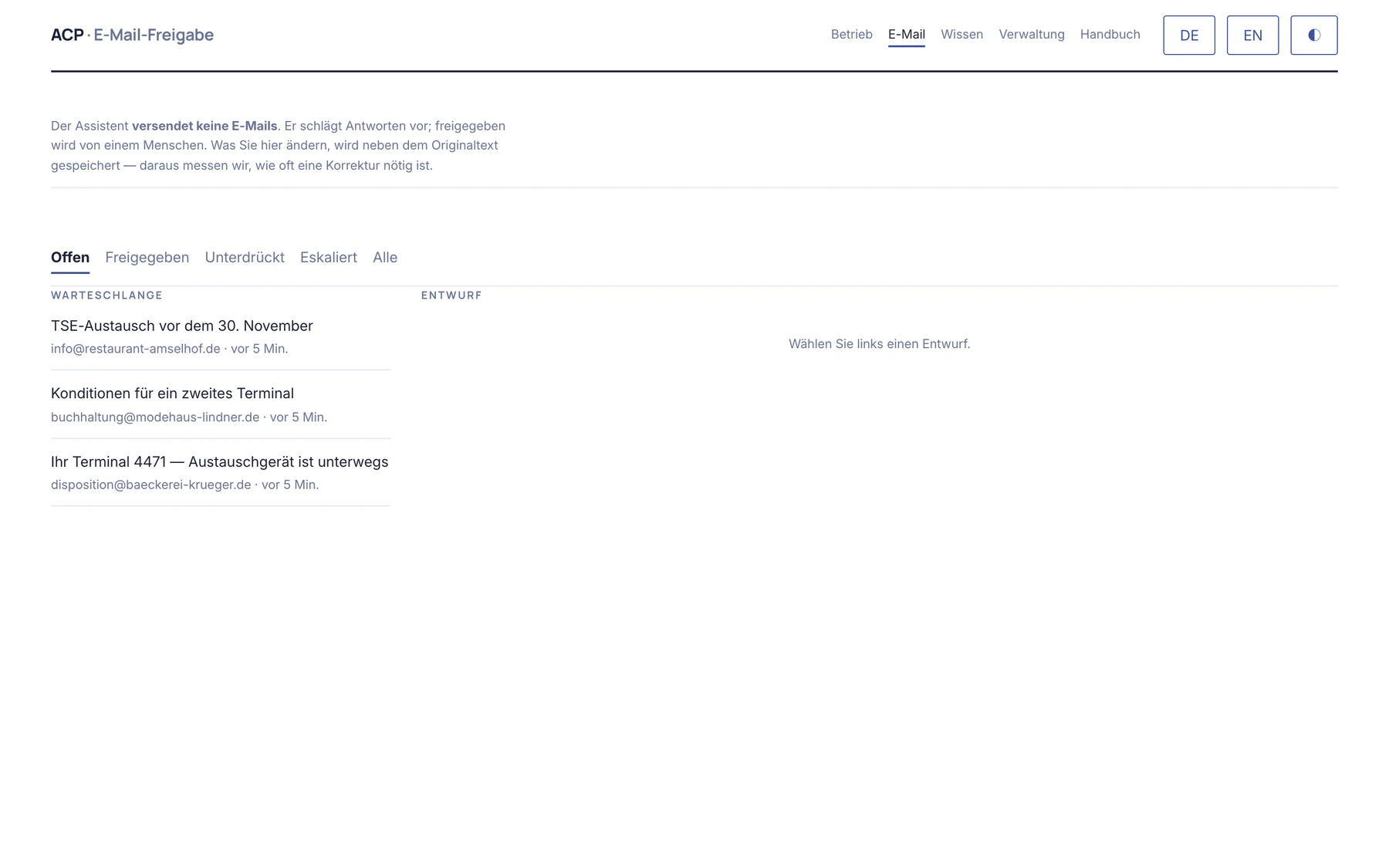
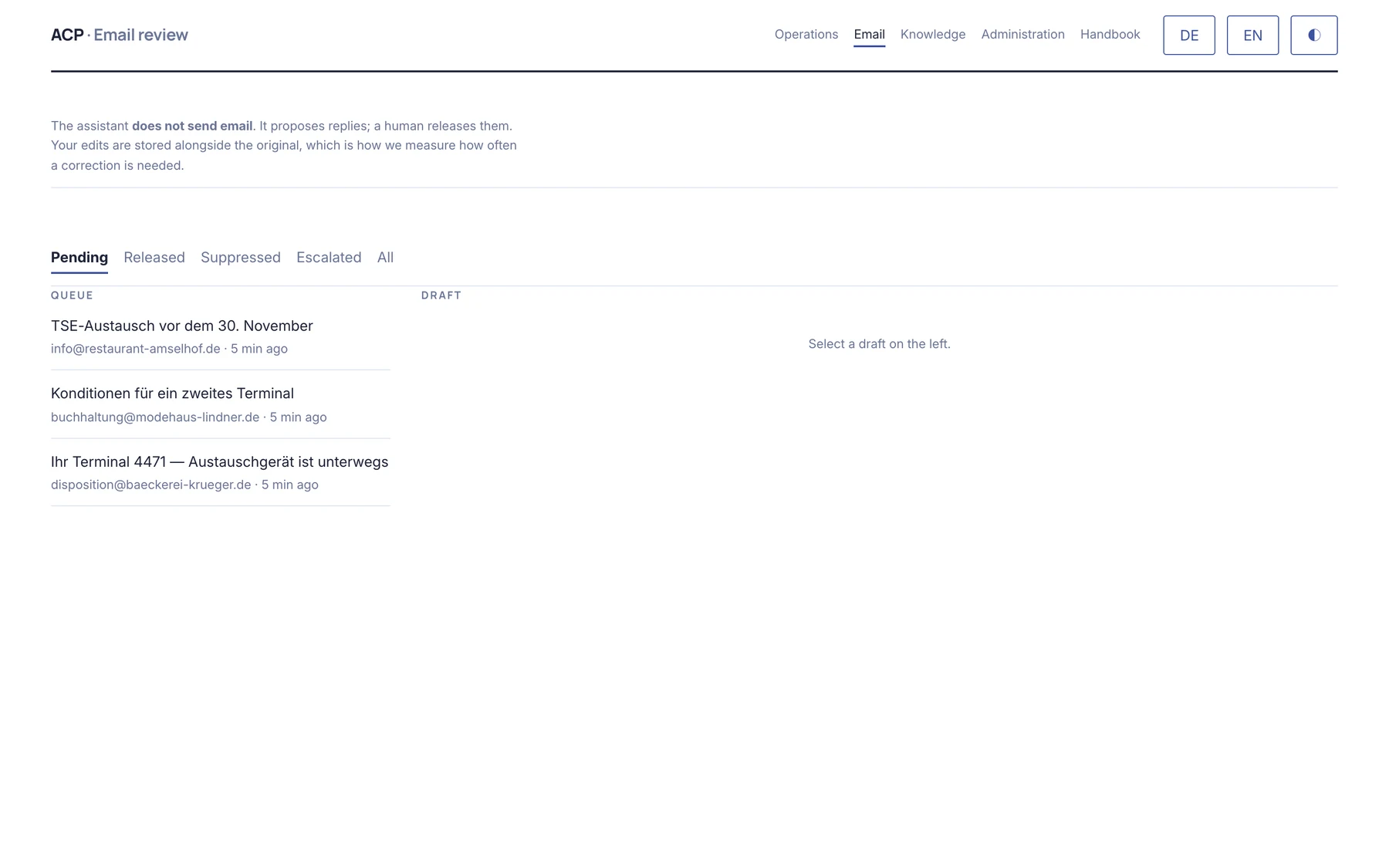
Sie dürfen den Text vor dem Versand ändern. Genau deshalb liegt der Grund daneben: Sie sollen prüfen können, ob der geänderte Text die Zusage noch einhält, die im Gespräch gemacht wurde.You may edit the text before it goes. That is exactly why the reason sits beside it: so you can check that the edited text still honours the commitment made in the conversation.
Ein Schichtablauf, der funktioniertA shift routine that works#
- Zu Beginn: Freigabeliste leeren. Was über Nacht wartet, blockiert ein Gespräch, das längst vorbei sein könnte.At the start: clear the approvals queue. Anything waiting overnight is blocking a conversation that could long since have ended.
- Dann: unbeobachtete Gespräche verteilen.Then: assign the unwatched conversations.
- Laufend: rote Zustände zuerst, aber nur lesen — nicht jedes rote Gespräch braucht eine Übernahme.Throughout: red health first, but read before acting — not every red conversation needs a takeover.
- Zum Schluss: die Lückenliste ansehen und eine einzige Antwort schreiben. Eine pro Schicht schlägt zwanzig pro Quartal.At the end: look at the gap board and write one answer. One per shift beats twenty per quarter.
Der Agent antwortet richtig, aber im falschen Ton. Was tun?The agent answers correctly but in the wrong tone. What now?
Das ist kein Wissensproblem. Ton, Anrede und Länge stehen im Character, Verhaltensregeln im Regelwerk — beides im Wissensmodul.
That is not a knowledge problem. Tone, address and length live in the character; behaviour rules live in the rulebook — both in the knowledge console.
Die Kundin fragt nach etwas, das wir wissen — der Agent findet es nicht.The customer asks about something we know — and the agent cannot find it.
Fast immer ist der Eintrag internal. Veröffentlicht heißt nicht erreichbar.
Almost always the record is internal. Published does not mean reachable.
Darf ich ein Gespräch einfach beenden?May I simply end a conversation?
Ja — aber übernehmen Sie vorher und sagen Sie es. Ein kommentarlos beendeter Anruf erzeugt einen zweiten Anruf.
Yes — but take over first and say so. A call ended without a word produces a second call.